You have been practising for weeks. You know the basics, you have done your EDT lessons, and your test date is finally booked. But the moment someone mentions the actual driving test, your stomach drops. Sound familiar? Almost every learner driver in Galway feels exactly the same way. The good news is there are very specific things you can do right now to make passing your Irish driving test first time a genuine, realistic outcome — not just something you hope for.
The Irish driving test is not designed to trick you. It is designed to confirm that you are a safe, competent driver. That means preparation is everything. In this guide we break down 11 practical, proven things you can do immediately to walk into the Galway driving test centre on Moneenageisha Road feeling ready, confident, and in control.
What does the Irish driving test actually involve?
Before diving into the 11 tips, it helps to understand exactly what you are being assessed on. The RSA driving test in Ireland lasts approximately 30 to 40 minutes and takes place on public roads around the test centre. In Galway, the primary test centre is located on Moneenageisha Road, Westside. The examiner assesses your ability to drive safely and independently, following the rules of the road.
There are two grades of fault during the test. A grade 3 fault results in an immediate fail — this is a dangerous action such as running a red light or pulling out in front of oncoming traffic. A grade 2 fault is a serious error, and accumulating too many in one category will also result in a fail. Understanding this grading system before you sit the test changes how you approach every manoeuvre.
How to pass your Irish driving test first time: 11 proven steps
1. Know exactly what the examiner is looking for
Download the official RSA test report form from rsa.ie and read every single category before your test. The examiner uses this exact form during your test. Knowing what is being assessed — observations, speed, positioning, signalling, manoeuvres — changes how you drive. Most learners who fail do so because they did not know what standard they were being held to.
2. Book a pre-test lesson on the actual driving test routes in Galway
The Galway test routes typically cover the Headford Road, Tuam Road, Knocknacarra, and the city centre one-way system around Eyre Square. If you have never driven these specific roads with an instructor pointing out the checkpoints, junctions, and common examiner observation points, you are going in underprepared. At GoDrive School of Motoring, our pre-test lessons are specifically designed around these exact routes. Book one in the week before your test — it is the single best investment you can make before test day.
3. Do a mock driving test at least once
A mock test replicates the real thing exactly: your instructor sits beside you in complete silence and lets you drive a full 30-minute route while noting faults on a test sheet. Most learners are surprised how different this feels from a normal lesson. The silence removes the safety net of guidance and forces you to make every decision independently — exactly as you will on test day. Do at least one full mock test, review the feedback seriously, and book a follow-up lesson to address any recurring faults before your actual test date.
4. Master your observations — the number one fail reason in Ireland
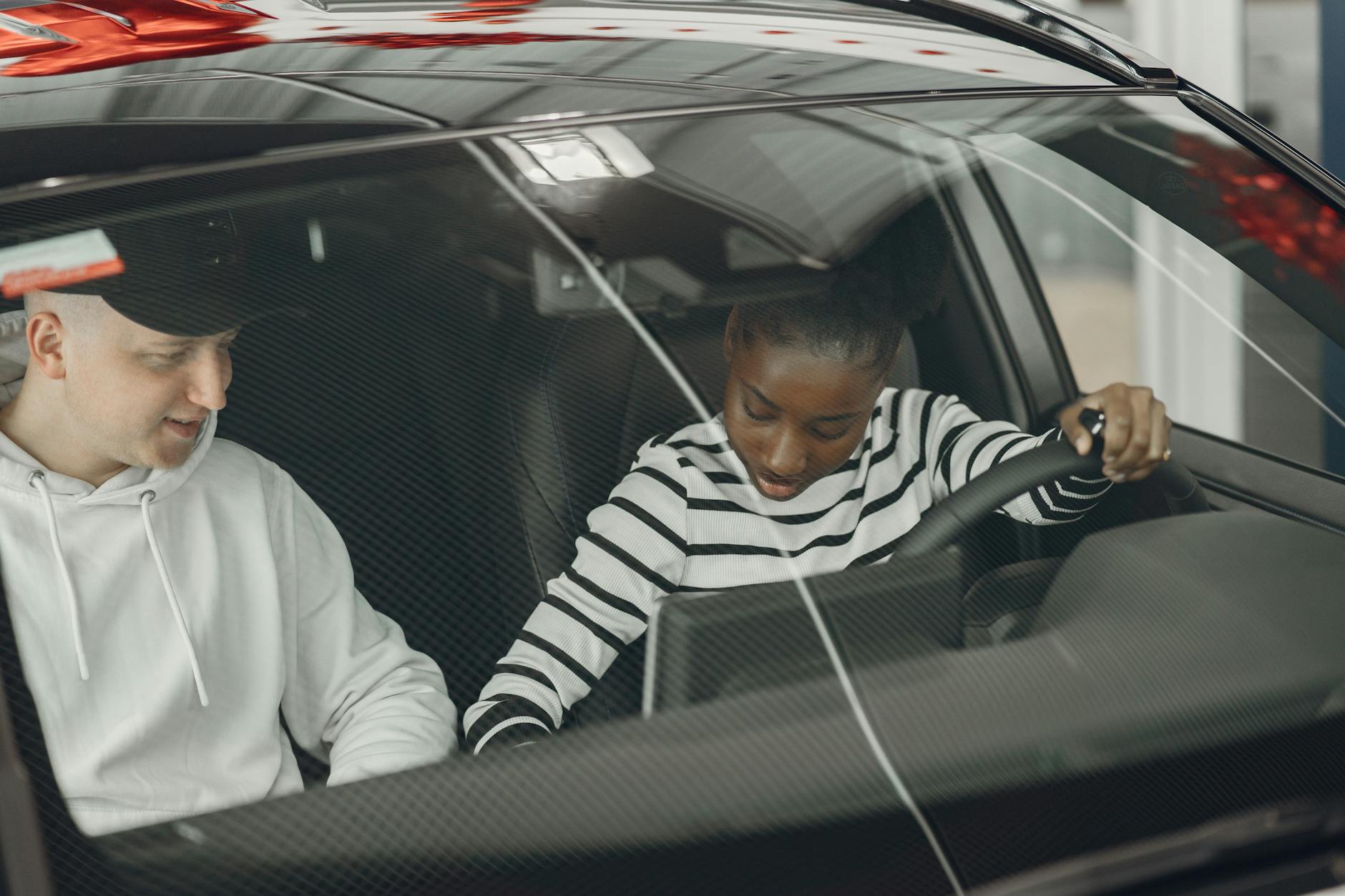
Insufficient observations is the single most common reason Irish learner drivers fail their driving test. This includes not checking mirrors before braking, skipping the full shoulder check before moving off, not performing a right-left-right check at junctions, and failing to check mirrors before signalling or changing speed. The fix is deliberate and repetitive practice: every time you perform any of these actions, make your mirror checks and shoulder checks visibly obvious. Examiners need to physically see that you looked. A quick subtle glance does not register.
Pre-test checklist: what to bring to the Galway driving test centre
- Your learner permit — original document only, no photocopies accepted
- A fully licensed accompanying driver (must hold a full Irish licence for the relevant category)
- A roadworthy car with valid motor tax, NCT certificate, and insurance
- L-plates clearly displayed front and rear
- Arrive at least 10 minutes early — rushing before a test dramatically increases anxiety
- Wear comfortable clothes and shoes suitable for driving
5. Practise your manoeuvres until they are completely automatic
The turnabout (three-point turn) and reverse bay park are the most commonly tested manoeuvres on the Irish driving test. The key to passing these is not speed or geometric perfection — it is slow controlled speed combined with constant, visible observations at every stage. Practise each manoeuvre at least 10 to 15 times in different locations around Galway until the sequence of checks and movements feels completely automatic rather than rehearsed. If you have to think about what comes next, you need more practice.
6. Understand Galway roundabout rules — there are a lot of them
Incorrect roundabout approach and exit is one of the most frequently recorded test faults at the Galway test centre. The rules are straightforward: approach in the left lane for exits 1 and 2 (left and straight ahead), approach in the right lane for exit 3 and beyond (right turns). Signal left as you pass the exit immediately before the one you intend to take. Always check your mirrors before signalling. Practise the larger roundabouts on the N6 and Headford Road approach specifically, in both quiet morning conditions and busy afternoon traffic.

7. Drive in silent test conditions for the 3 days before your test
In the three to four days before your test, ask your licensed accompanying driver to sit completely silently while you drive — no commentary, no guidance, no corrections. This replicates exam conditions and helps your brain adapt to making every decision without input. Also drive at the same time of day as your booked test appointment. Galway city traffic at 8:30am behaves very differently to traffic at 2pm — the junctions, pedestrian crossings, and roundabout flows are all different. Your preparation should match the conditions you will face.
8. Drive at the correct speed — driving too slowly is also a fault
Many learner drivers default to driving 10 to 15 km/h below the posted speed limit during their test out of nervousness. This is recorded by the examiner as undue hesitancy and accumulates as faults. Know the default speed limits on Irish roads: 50 km/h in built-up areas, 80 km/h on regional roads, 100 km/h on national roads. Around the Galway test routes, you will spend most of the test in 50 km/h zones. Drive at the appropriate safe speed for the conditions — not the maximum permitted, but not crawling either.
9. Get a full night of sleep the night before your test
This is the most underrated preparation step. Research consistently shows that decision-making performance degrades significantly under tiredness, and driving tests require constant rapid decision-making. Avoid scheduling a late practice session the night before — your muscle memory is already set and a single extra practice run will not improve your test result, but being tired will actively harm it. Get to bed at a reasonable hour, eat a proper meal before the test, and avoid excessive caffeine which increases anxiety and impairs fine motor control.
10. Understand how to respond correctly to examiner directions
The examiner will introduce themselves briefly at the start and then give directions throughout the test: “turn left at the next junction”, “take the second exit at the roundabout”, “pull up on the left when it is safe to do so.” They will not say please or thank you mid-test and their tone is deliberately neutral. This is professional conduct — not unfriendliness, not a sign that you are doing badly. If you miss a direction or make a wrong turn, do not panic and do not apologise at length. One wrong turn does not fail a test. Simply acknowledge, correct your position safely, and continue driving.
11. Fix your specific weak points in lessons before test day
Every learner driver has at least one recurring fault that their instructor keeps mentioning — the thing you do consistently wrong under pressure. Maybe it is not checking the left mirror before pulling in to the kerb. Maybe it is rolling slightly at a stop sign. Maybe it is the clutch biting point on a hill start. Whatever your specific fault is, address it directly in a dedicated lesson before your test date. Do not plan to simply “be more careful on the day” — under test pressure, deeply ingrained habits almost always revert. Book a lesson with GoDrive that focuses specifically on your weak area and drills it out completely.
Galway driving test pass rate: what the numbers say
Understanding the pass rate context helps set realistic expectations. Roughly half of all learner drivers in Ireland pass their driving test on the first attempt. This figure means that preparation — not natural ability, not luck — is the primary factor separating those who pass from those who need to rebook.
| Test centre | Approx. first-time pass rate | Key local challenge |
|---|---|---|
| Galway — Moneenageisha Road | Approx. 48–52% | Roundabouts, city one-way system |
| National average (Ireland) | Approx. 50–55% | Observations, speed control |
The 11 steps above directly address the most common reasons candidates end up in the half that needs to rebook. Work through each one systematically in your remaining lessons before test day.
The most common reasons people fail the Irish driving test
Based on RSA data and instructor experience, these are the fault categories that account for the majority of Irish driving test failures:
- Observations at junctions — failing to look properly before proceeding
- Mirror checks — not checking mirrors before braking, signalling, or changing speed
- Roundabout errors — incorrect lane, missing signals, failing to give way
- Speed control — driving too slowly (hesitancy) or exceeding limits
- Positioning — incorrect road position, especially on bends and approach to junctions
- Signalling — missing signals, signalling too late, or incorrect signals
- Manoeuvre observations — insufficient all-round checks during turnabout or parking
Frequently asked questions about passing your Irish driving test
How many lessons do I need before the Irish driving test?
Most learner drivers in Ireland need between 30 and 40 hours of professional instruction before they are ready to attempt the driving test. This is in addition to private practice with a licensed accompanying driver. The mandatory 12 EDT lessons provide a foundation, but most candidates benefit from additional lessons focused on test preparation, mock tests, and route familiarisation.
What happens if I fail my driving test in Ireland?
If you fail your driving test, you will receive a written report from the examiner listing the faults recorded during the test. You can rebook another test immediately. There is no minimum waiting period between attempts, though in practice test dates in Galway typically have a waiting time of several weeks. Use the fault report as a precise guide for your next lessons — every fault listed is something specific to address.
Can I use my own car for the driving test in Galway?
Yes, you can use your own car provided it meets RSA requirements: valid motor tax, a valid NCT certificate (if the vehicle is over 4 years old), valid insurance covering you as a learner driver, and L-plates displayed front and rear. If your car does not meet these requirements or is not available on test day, GoDrive offers car hire for the driving test in Galway — a fully maintained, insured, dual-control vehicle with all documentation in order.
How long does the Irish driving test take?
The driving test itself takes approximately 30 to 40 minutes of on-road driving. Allow an additional 10 to 15 minutes for the pre-drive checks and documentation review at the test centre. In total, plan for approximately one hour from arrival to receiving your result.
What is the best way to prepare for the Galway driving test routes?
The most effective preparation is to drive the actual test routes with an experienced local instructor who knows the specific checkpoints, common examiner observation spots, and junction approaches that are regularly assessed. GoDrive School of Motoring instructors are based in Galway and conduct pre-test lessons on the exact routes used by the Moneenageisha Road test centre. Booking a pre-test lesson in the week before your test is the single most targeted preparation you can do.

Ready to pass your Irish driving test first time?
Remember that feeling at the start — stomach dropping at the mention of the test? The drivers who pass first time are not less nervous than you. They are simply more prepared. They have completed their mock tests, they know the Galway routes, they have drilled their observations until they happen automatically, and they walked into the test centre knowing exactly what the examiner needs to see.
At GoDrive School of Motoring in Galway, we offer pre-test lessons specifically designed to walk you through the exact test routes and common examiner checkpoints at the Moneenageisha Road test centre. Our RSA-approved instructors work with learners at every stage — from nervous beginners to experienced drivers preparing for their final test attempt. Get in touch today to book your pre-test lesson and give yourself the best possible chance of passing your Irish driving test first time.
One Response